



-

Silicon carbide tiles
Silicon carbide (SiC)
Features of the product:
Silicon carbide ceramic is the lightest and hardest ceramic material. It has excellent thermal conductivity, low thermal expansion, very acid and alkali resistance, and is not easy to crack in cold and hot environments.
Therefore, silicon carbide ceramic is an excellent furnace material and high-temperature wear-resistant part. It also has excellent corrosion resistance and wear resistance.
Product performance:
Very low density: (3.20 g/cm ³)
Very high hardness: (94HRA)
High thermal conductivity: (80 W/mK)
Low linear expansion coefficient: (4.5×10⁻⁶/K-1400 ℃)
Maximum service temperature: 1500 ℃
Maintain good corrosion resistance and wear resistance at high temperature
The outstanding characteristics of SiC ceramics:
Low density, high elastic modulus; High strength, especially high temperature strength and low temperature; High hardness and low friction coefficient, excellent wear resistance; Low thermal expansion coefficient, high thermal conductivity, and excellent thermal shock resistance; Good chemical stability and excellent corrosion resistance; The resistivity can be controlled by purity and doping, and has semiconductor characteristics.
2. SiC Product series:
As structural ceramics and high-temperature materials with excellent performance, SiC ceramics have been used more and more in petrochemical, iron and steel metallurgy, mechanical and electronic, aerospace, energy and environmental protection, nuclear energy, automobile, high-temperature kiln and other industrial fields.
(1) Sealing ring and bearing:
Due to its excellent wear resistance, high thermal conductivity, high temperature resistance and corrosion resistance, pressureless sintering and reactive sintering dense SiC material is an ideal material for manufacturing sealing rings, sliding bearings and friction protection shaft sleeves. It can be processed into sealing rings with various shapes and high dimensional accuracy and surface finish, which can be used as mechanical seals in many harsh environments. For example, the sealing device and sliding device used for acid-resistant and alkali-resistant pumps in the shipbuilding, chemical, metallurgy, petroleum and paper industries have been widely used due to their good air tightness and long service life.
Take the application of SiC sealing ring in surface sealing of automobile water-cooled pump as an example. The face seal mainly provides the seal of the rotating interface to prevent the liquid or gas on one side of the seal from flowing to the other side. For the water-cooled circulating water pump device of automobile engine, the ceramic ring seal can avoid water leakage during the rotation of the water pump, and can realize sealing and sliding at the same time. In the past, Al and O ceramics were commonly used, but now SiC materials are used because SiC has higher hardness, better wear resistance and longer service life than AlO. Similar SiC sealing rings are also used in automobile air conditioning compressors.
(2) Bulletproof ceramic
Due to its high hardness, low density, good protective performance and low price (compared with B4C ceramics), SiC ceramics have certain competitive advantages in the application of bulletproof armor. Its protective performance is better than that of AL2O3 ceramics and slightly inferior to B4C ceramics (about 70%~80% of B4C ceramics), but the manufacturing cost of SiC ceramics is far lower than that of B4C ceramics. At present, normal-pressure sintered SiC and reaction-sintered SiC ceramic plates are particularly suitable for occasions with large amounts of protective armor and cannot be too thick and heavy. For example, SiC ceramics with high hardness, high toughness and high Weibull modulus (four-point bending strength is 580 MPa, fracture toughness Kc is. 7MPam1/2, Weibull modulus m=17) prepared by American companies are excellent bulletproof materials.
(3) Nozzle
Various nozzles are needed in the fields of petroleum industry, energy, environmental protection, aerospace rocket and machinery manufacturing. SiC ceramics are widely used because of their higher hardness, thermal shock resistance and excellent corrosion resistance than Al2O3 and Si3N4 ceramics. For example, the service life of SiC ceramic is 3.5 times longer than that of Al2O3 ceramic. Reactive sintering, pressureless sintering and recrystallized SiC can be used as burner nozzles in high-temperature kilns and desulfurization nozzles for desulfurization and dust removal in thermal power plants.
(4) Grinding plate Grinding plate is an important process equipment for the production of silicon wafers for ultra-large-scale integrated circuits in the semiconductor industry. Generally used cast iron or carbon steel grinding plates have short service life and large thermal expansion coefficient. In the process of processing silicon wafers, especially in high-speed grinding. During polishing, the flatness and parallelism of the silicon wafer are difficult to be guaranteed due to the wear and thermal deformation of the grinding plate. Because of its high hardness and low wear, and its thermal expansion coefficient is basically the same as that of silicon wafers, the grinding disc made of silicon carbide ceramics can be grinded and polished at high speed. In recent years, the size of silicon wafers has become larger and larger, and higher requirements have been put forward for the quality and efficiency of silicon wafers. The use of SiC ceramic abrasive discs will significantly improve the quality and efficiency of silicon wafer grinding. SiC ceramic abrasive discs manufactured by Kyocera Corporation, Toshiba Ceramics Corporation, and Caballendon Corporation of the United States have been used in the semiconductor industry.
(5) High temperature heat exchanger
In many cases, for example, in metal and glass furnaces, furnaces and coal burning furnaces, the gas emitted is not only high temperature but also corrosive, which requires that the heat exchanger also have high temperature resistance, corrosion resistance and thermal shock resistance, and can withstand large thermal stress. Another performance requirement for heat exchanger materials is high thermal conductivity to maximize heat transfer rate and heat exchanger efficiency. SiC has been the main material of industrial heat exchanger for a long time because of its high thermal conductivity, excellent high-temperature resistance, corrosion resistance and good thermal shock resistance. For example, the SiC heat exchanger of steel forging furnace has been put into use for more than 500000 hours since 1985, and the use of SiC heat exchanger in Hao remelting furnace can save 38% of fuel.
(6) Thermal engine parts
The outstanding high temperature strength, excellent high temperature creep resistance and thermal shock resistance of SiC ceramics make it one of the main materials for thermal engine components in rockets, aircraft, automotive engines and gas turbines. For example, the AGT100 automotive ceramic gas turbine developed by General Motors uses SiC ceramics as high-temperature components such as combustor ring, combustor barrel guide vane and turbine rotor. These SiC components are mainly prepared by reactive sintering, pressureless sintering or hot-pressing sintering. Due to the poor toughness of SiC ceramics, they are mainly used as static heat engine components in engines or gas turbines.
(7) High temperature seal
Both recrystallized SiC and solid-phase normal-pressure sintered SiC ceramics are excellent high-temperature sealing materials, which can be used as high-temperature crossbeam sticks, shed plates, saggers, etc., and the service temperature reaches 1600C, as shown in Figure 8-13 (b) and (h). SAINTGOBAIN, France, uses pressureless sintered SiC ceramics to make the beam of high temperature sealing tool, which has the characteristics of self-bonding and fine grain (<10 um) microstructure, and its high temperature strength and oxidation resistance are very excellent. Under the condition that the bending strength at 1700C is maintained above 400 MPa and 1100C wet steam, the oxidation weight gain is far less than that of recrystallized SiC and SiN-bonded SiC ceramics.
-

Wear resistant RBSiC and SSiC plates, blocks, tiles, ceramic and rubber plates
Silicon carbide ceramic tiles
The covalent bond of silicon carbide is very strong, and it still has high strength bond at high temperature. This structural feature endows silicon carbide ceramics with excellent strength, high hardness, wear resistance, corrosion resistance, high thermal conductivity, good thermal shock resistance and other properties; At the same time, silicon carbide ceramic is one of the most promising high-performance armor protection materials with moderate price and high cost performance.
Silicon carbide ceramic has broad development space in the field of armor protection, and its application in the fields of individual equipment and special vehicles tends to be diversified. As a protective armor material, considering the cost and special application conditions, small ceramic panels and composite backplates are usually bonded to form ceramic composite target plates to overcome the failure of ceramics due to tensile stress, and to ensure that only a single piece is broken without damaging the whole armor when the projectile penetrates.
Silicon carbide ceramic tiles are also widely used as wear-resistant ceramics.
-
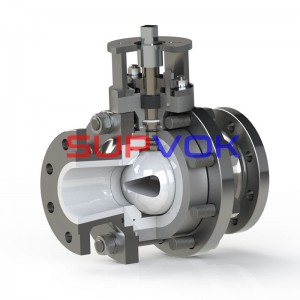
Special ceramic valve
As a professional supplier of ceramic ball valves in the world, KSINO is not only committed to the production of various ceramic valves, but also has been committed to the research and development of new ceramic materials. Y-TZP and Ce-TZP are widely used because of their high strength, good wear resistance, good chemical stability and other characteristics. However, due to their thermal shock resistance, they cannot be used under high temperature conditions. As the ball core of valve, its toughness is limited, which may lead to broken ball in case of jamming or locking. In order to meet the increasingly complex and harsh service conditions of ceramic valves, especially the higher service temperature, we have developed a magnesium oxide partially stabilized zirconia ceramic (Mg-PSZ) with excellent thermal shock resistance, and after continuous research and experiment, continuous innovation, we have developed a composite ceramic material with excellent thermal shock resistance and toughness comparable to metal.
The composite ceramic material developed by our company is made of metal and ceramic powder mixed and sintered. The metal elements can be Ti, Cr, Ni, Co, etc., which can be used alone or in combination, or other alloy powders. The selected metal elements have no chemical reaction with ceramic powder, the thermal expansion coefficient is close, and the wetting ability between metal and ceramic particles is good. Ceramic elements provide the ability to bear loads and wear resistance, while metal elements endow them with impact resistance toughness. Therefore, the composite ceramic material has a series of excellent properties, such as high strength and hardness, good toughness, good wear resistance, small coefficient of thermal expansion, high modulus of elasticity, good thermal shock resistance and good chemical stability, which can not be obtained by using only metal or ceramics. Although its corrosion resistance is reduced due to the addition of metal elements, its toughness and thermal shock resistance are significantly improved, which can not only meet the requirements for use under high temperature conditions, but also avoid broken balls due to jamming or locking.

Mixed sintering of metal and ceramic powder
Wedge gate valve
Wear resistant adjustable pulverized coal valve
Gate valve
Globe valve
Slag discharge check valve
Wear resistant expansion device
Three-way reversing valve with form of cast stone wear-resistant ball
Manual and electric wear and corrosion resistant ball valve
Plate gate valve
Wear resistant slag discharge gate valve
Electric wear-resistant pulverized coal gate valve
Wear resistant and anti scaling gate valve
Throttle valve
Combined stop throttle valve
Wear resistant throttle valve
Dry ash gate valve -
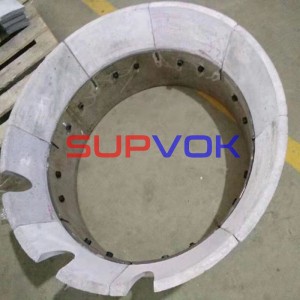
Silicon carbide nozzle assembly – silicon carbide concentrator/wear plate/pipe fitting/gear ring/stop/tee in power plants
The main function of the silicon carbide nozzle of the burner is to inject the pulverized coal air mixture (primary air) supplied by the pulverized coal preparation system and the secondary air required for combustion into the furnace at a certain concentration and speed, respectively, so as to achieve stable ignition and combustion in the suspended state.
- 1. The structure of silicon carbide nozzle must be simple, not easy to block, easy to repair and replace, long service life, and improve economic efficiency.
- 2. The silicon carbide nozzle adopts an integrated casting molding process, which is high temperature resistant, wear-resistant and reduces maintenance costs.
The burner nozzles of power plant generally adopts cast steel structure. The proper swing of the burner nozzle can change the position of the flame center to adjust the reheat steam temperature level; The thick and thin pulverized coal burner can prevent furnace coking and high-temperature corrosion, and has the characteristics of stable ignition, good combustion stability at low load, and low NOx emission. After the primary air cast steel nozzle of the burner is burnt and deformed, the deviation between the furnace flame center and the design value is large, and the deviation between the nozzle size and the original size is large. The initial momentum of the jet is reduced compared with that before the burning loss, the range is shorter, and the rigidity is poor. The pulverized coal ignites near the nozzle, and the temperature near the nozzle is high, which is easy to produce slagging. The primary air nozzle of the burner needs to be replaced after it is burnt. During the replacement, the powder pipes connected to the outside of the burner need to be disconnected, the primary air nozzle of the burner and the nozzle should be pulled out together, then replaced, and then loaded. The workload is large, the environment is poor, and it costs labor, time, and money, resulting in great economic losses.
The silicon carbide nozzle of the burner produced by our company is wear-resistant, high-temperature resistant, non-deformable, and its service life is 3-5 times that of the cast steel nozzle, which improves the boiler efficiency, reduces NOX emissions, saves energy and environmental protection, reduces maintenance costs, and improves economic benefits.
It adopts integrated molding process, which is resistant to high temperature, abrasion and deformation.
The defects of cast steel nozzle mainly include the following aspects.
1. The nozzle of cast steel is not wear-resistant, corrosion resistant, high temperature resistant and has short service life. The boiler needs to be shut down for replacement, resulting in great economic losses.
2. The cast steel nozzle is easy to be damaged during the operation of the unit, and the blunt body of the nozzle often falls off, threatening the operation of the burner and the safe operation of the slag extractor.
3. Because the nozzle material is G40Cr20Ni5, which works under high temperature for a long time, when the combustion of pulverized coal is unstable, it will cause uneven temperature distribution in the furnace or coking at the nozzle, resulting in thermal stress at the nozzle due to temperature difference, resulting in serious local deformation of the nozzle, short range of primary air, poor rigidity, pulverized coal ignition near the nozzle, high temperature near the nozzle, and local additional stress in the component. When the temperature fluctuation is large, The thermal stress changes greatly, causing thermal fatigue cracks on the nozzle surface, which will cause the burner nozzle and nozzle to burn over a long period of time.
4. Because the primary air flow is a high-speed gas-solid two-phase flow, the uneven scouring of pulverized coal particles leads to serious local wear of the blunt body and even wear off the blunt body. The nozzle and the blunt body are integrated. On the other hand, the thermal stress at high temperature is easy to cause serious deformation of the nozzle, even burning out, so the nozzle can not play its due role.
-
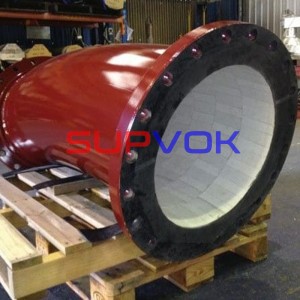
Alumina, NSiC, ZTA Ceramic lined pipes
The core technology of KSINO wear-resistant and corrosion-resistant products comes from US and Germany. KSINO’s products have been in leading position in Chinese ceramic technology, ceramic metal composite technology, wear-resistant pipeline manufacturing, belt cleaning technology and other fields.
It is the common sense that no product in the world can adapt to all working conditions. On the basis of fully mastering the rules of wear and corrosion, it is correct to select the most appropriate materials. Therefore, KSINO has developed a wide range of wear-resistant and corrosion-resistant products. From metal materials to non-metallic materials, we will continue to develop more and better wear-resistant and corrosion-resistant products in the future.
-
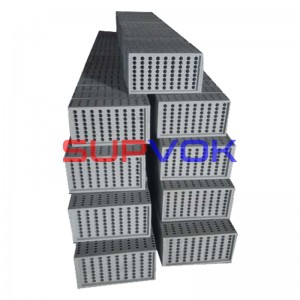
Honeycomb Ceramic Foam Filter
Special foam ceramic filter:
Foam ceramic filter is a foam shaped ceramic product that is immersed in the ceramic slurry made of fire-resistant aggregate, sintering aid, binder and other micro powders and water, and after extruding the excess slurry, the remaining ceramic material wrapped around the foam fiber is dried and sintered at high temperature. The carrier of foam ceramic filter is generally polyurethane foam.
-
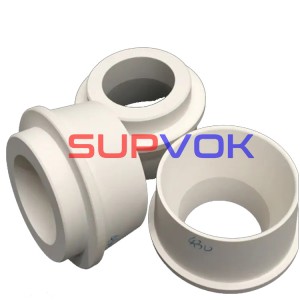
Aluminum Titanate-silicate Ceramics
Production technique: Isostatic Pressure
This product has excellent corrosion resistance, high room temperature & high temperature strength, superior air tightness and excellent thermal shock resistance. It has been widely used in aluminum products industry and low-pressure die casting industry.
-
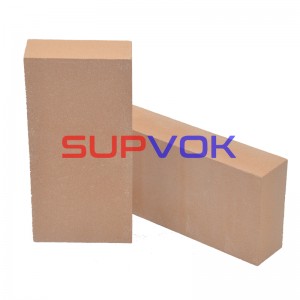
High alumina refractory brick
Application Refractory bricks Classification Material Fire-resistance temperature ℃ Volume density g/cm³ Compressive strength Mpa Applications refractory fireclay block AL2O3≤45% Fireclay 1780 1 8 Light clay bricks are mainly used as thermal insulation materials in various kinds of industrial kilns, such as thermal boilers, glass kilns, cement kilns, chemical fertilizer gas making furnaces, blast furnaces, hot blast furnaces, coking furnaces, electric furnaces,... -
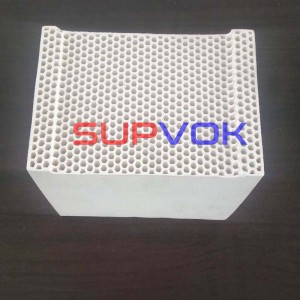
Mullite Products, Mullite ceramic honeycomb, Special heat storage ball
Packing method: plastic woven bag
Specification: 25kg/ bag
Note: KSINO can customize various models of products based on customer requirements.
If any needs, please feel free to contact us at your convenience!
-

Ash ditch combined panel
Cast stone products include cast stone pipe, cast stone plate, cast stone powder, cast stone composite pipe, etc.
Forged clamp type flexible pipe joint is divided into ring type and shoulder type. The products are mainly used in electric power, metallurgy, mining, coal, building materials, chemical industry and other industries.
-

-
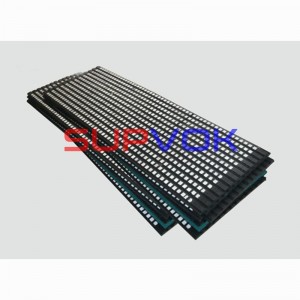
Ball mill ceramic rubber plates
Rubber ceramic composite lining plate
Two-in-one lining plate
Three-in-one lining plate
